Search engine optimization has its own language. If you’re new to SEO, digital marketing, or website optimization, terms like CRO, canonical tag, Core Web Vitals, AI Overviews, robots.txt, and schema markup can feel overwhelming.
That’s why we created this complete SEO glossary.
Use this guide to learn the most important SEO terms, definitions, acronyms, and concepts you need to understand in 2026. Whether you’re a business owner, marketer, student, developer, or content writer, this glossary will help you decode SEO terminology and make smarter decisions about your website.
Modern SEO now includes traditional search optimization, technical website performance, content strategy, local SEO, structured data, and visibility in AI-powered search features. Google’s current guidance still centers on creating helpful, reliable, people-first content and meeting technical requirements that allow pages to be crawled, indexed, and served in Search. 1
Quick SEO Glossary Navigation
Use the alphabetized navigation below to jump to a section:
0-9 | A | B | C | D | E | F | G | H | I | J | K | L | M | N | O | P | Q | R | S | T | U | V | W | X | Y | Z
How to Use This SEO Glossary
This SEO glossary is organized alphabetically so you can quickly find any term you need.
You can use it to:
- Learn SEO terminology before hiring an SEO agency
- Train marketing team members
- Understand SEO reports and analytics dashboards
- Improve communication between marketers, developers, and leadership
- Build stronger content, technical SEO, and link-building strategies
- Keep up with modern SEO concepts like AI SEO, GEO, Core Web Vitals, and structured data
Pro tip: Bookmark this page and use your browser’s search function to quickly find any SEO term.
Popular SEO Terms to Know First
If you’re brand new to SEO, start with these terms:
- SEO
- Keyword
- Search intent
- Organic traffic
- SERP
- Backlink
- Technical SEO
- On-page SEO
- Off-page SEO
- Core Web Vitals
- Title tag
- Meta description
- Internal link
- Schema markup
- Google Search Console
- AI Overviews
Need Help Turning SEO Terms Into SEO Results?
Understanding SEO terminology is a great first step — but improving rankings requires strategy, execution, and ongoing optimization.
WebFX can help you turn SEO knowledge into measurable revenue growth.
Get a free SEO strategy review and see what’s holding your website back.
CTA Button: Get My Free SEO Audit
CTA URL Suggestion: /seo-audit/
0-9
.htaccess
A .htaccess file is a website configuration file used on Apache servers. It can control redirects, password protection, URL rewriting, caching rules, and other server-level settings.
200 Status Code
A 200 status code means a page, file, or image was found and loaded successfully. It tells browsers and search engines that the requested resource is available.
301 Redirect
A 301 redirect is a permanent redirect from one URL to another. It is the SEO best practice when a page has permanently moved because it helps pass ranking signals from the old URL to the new one.
302 Redirect
A 302 redirect is a temporary redirect. It tells browsers and search engines that a URL has moved temporarily and may return to its original location later.
307 Redirect
A 307 redirect is a temporary HTTP redirect that preserves the original request method. It is commonly used when the redirect should not be treated as permanent.
308 Redirect
A 308 redirect is a permanent redirect that preserves the request method. It is similar to a 301 redirect but stricter in how it handles HTTP methods.
404 Status Code
A 404 status code means a page or file was not found. Custom 404 pages can improve user experience by helping visitors find useful content instead of leaving the site.
410 Status Code
A 410 status code means a page is gone permanently. Unlike a 404, it clearly indicates that the resource has intentionally been removed.
500 Status Code
A 500 status code indicates an internal server error. Frequent 500 errors can hurt user experience and prevent search engines from accessing your content.
A
A/B Testing
A/B testing is the process of comparing two versions of a webpage, ad, email, or campaign to see which performs better. It is also called split testing.
Above the Fold
Above the fold refers to the part of a webpage visible before a user scrolls. Important messaging, navigation, and CTAs are often placed here to capture attention quickly.
Absolute Link
An absolute link uses the full URL of a webpage, including the protocol and domain. Example: https://www.example.com/blog/seo-guide/.
Ad Rank
Ad Rank determines the position of paid search ads. It is influenced by bid amount, ad quality, expected click-through rate, landing page experience, and other factors.
AdSense
Google AdSense is a platform that allows publishers to earn money by displaying ads on their websites.
Advertising Network
An advertising network connects advertisers with websites, search engines, apps, or platforms that have available ad space.
Affiliate Marketing
Affiliate marketing is a performance-based marketing model where affiliates earn commissions for driving actions such as sales, leads, or signups.
AI Content
AI content is text, images, videos, or other assets created with artificial intelligence tools. For SEO, AI-assisted content should still be accurate, original, helpful, and reviewed by humans.
AI Mode
AI Mode is a Google Search experience that provides AI-powered responses for more complex, exploratory, or multi-step queries. Google states that standard SEO best practices still apply for appearing in AI features such as AI Overviews and AI Mode. 2
AI Overviews
AI Overviews are generative AI summaries that can appear in Google Search results. They are designed to help users quickly understand complex topics and explore supporting links. 2
AI SEO
AI SEO is the use of artificial intelligence to support SEO tasks such as keyword research, content briefs, internal linking, reporting, and technical audits.
Algorithm
An algorithm is a set of rules or calculations used to solve a problem. Search engines use algorithms to determine which pages appear in search results and how they rank.
Algorithm Update
An algorithm update is a change to how a search engine evaluates and ranks content. Updates can affect rankings, visibility, and traffic.
Alt Attribute
An alt attribute, often called alt text, is HTML text that describes an image. It helps search engines understand images and improves accessibility for users with screen readers.
AMP
Accelerated Mobile Pages, or AMP, is a framework for creating fast-loading mobile pages. AMP is less central to SEO strategy than it once was, but page speed remains important for user experience.
Analytics
Analytics refers to the collection and analysis of data about website traffic, user behavior, conversions, and performance.
Anchor Text
Anchor text is the visible, clickable text in a hyperlink. Descriptive anchor text helps users and search engines understand the destination page.
Answer Engine Optimization
Answer engine optimization, or AEO, is the practice of optimizing content to answer questions clearly in search engines, AI assistants, featured snippets, and other answer-based platforms.
API
An application programming interface, or API, allows different software systems to communicate and exchange data.
Article Schema
Article schema is structured data that helps search engines understand article content, including headline, author, date published, and date modified.
Attribution Model
An attribution model determines how credit is assigned to marketing touchpoints that contribute to a conversion.
Authority
Authority refers to the perceived credibility, trustworthiness, and influence of a website or webpage. Search engines may evaluate authority through links, reputation, content quality, and other signals.
B
B2B SEO
B2B SEO is search engine optimization for businesses that sell to other businesses. It often focuses on longer buying cycles, high-value leads, thought leadership, and bottom-funnel content.
B2C SEO
B2C SEO is search engine optimization for businesses that sell directly to consumers. It often emphasizes product pages, category pages, local visibility, reviews, and lifestyle-driven content.
Backlink
A backlink is a link from another website to your website. High-quality backlinks can help improve authority, rankings, and referral traffic.
Backlink Analysis
Backlink analysis is the process of reviewing the websites that link to your site or a competitor’s site. It helps identify link opportunities, toxic links, and authority gaps.
Bad Link
A bad link is a low-quality, spammy, irrelevant, or manipulative backlink that may harm a website’s SEO performance.
Banner Ad
A banner ad is a visual display advertisement that appears on a webpage, app, or digital platform.
Banner Blindness
Banner blindness occurs when users ignore display ads because they are used to seeing them in predictable locations.
Behavioral Targeting
Behavioral targeting uses data about a user’s past actions, searches, purchases, or website visits to deliver more relevant ads.
Bing
Bing is Microsoft’s search engine. It powers search results across Microsoft products and other search experiences.
Black Hat SEO
Black hat SEO refers to tactics that violate search engine guidelines, such as cloaking, keyword stuffing, link schemes, and spammy automation.
Blog
A blog is a regularly updated section of a website featuring articles, guides, news, opinions, or educational resources.
Blog SEO
Blog SEO is the process of optimizing blog posts to rank in search results and attract organic traffic.
Boolean Search
Boolean search uses operators like AND, OR, NOT, and quotation marks to refine search results.
Bounce Rate
Bounce rate is the percentage of sessions where a user visits one page and leaves without further interaction. In GA4, bounce rate is closely related to engagement rate.
Brand Mention
A brand mention occurs when another website or platform refers to a company, product, or brand name, with or without a link.
Branded Keyword
A branded keyword includes a company, product, or brand name. Example: “WebFX SEO services.”
Breadcrumb Navigation
Breadcrumb navigation shows users where they are within a website’s hierarchy. Example: Home > Services > SEO Services.
Broken Link
A broken link is a hyperlink that no longer works because the destination page is missing, moved, or unavailable.
C
Cache
A cache is a stored version of a webpage, file, or resource used to load content faster.
Canonical Tag
A canonical tag is an HTML element that suggests the preferred version of a page when similar or duplicate URLs exist. Google treats canonical tags as hints, not absolute directives. 3
Canonical URL
A canonical URL is the preferred URL selected to represent a set of duplicate or similar pages. Canonicalization helps search engines consolidate ranking signals and show the most appropriate version in search results. 3
Cart Abandonment Rate
Cart abandonment rate is the percentage of ecommerce users who add products to their cart but leave before completing a purchase.
ccTLD
A country code top-level domain, or ccTLD, is a domain extension tied to a country or region, such as .uk, .ca, or .au.
ChatGPT SEO
ChatGPT SEO refers to using ChatGPT or similar AI tools to assist with SEO tasks such as ideation, outlining, content optimization, and analysis.
Click Depth
Click depth measures how many clicks it takes to reach a page from the homepage. Important pages should usually be accessible within a few clicks.
Click-Through Rate
Click-through rate, or CTR, is the percentage of users who click a result, link, or ad after seeing it.
Cloaking
Cloaking is a black hat SEO tactic where different content is shown to search engines than to users. It violates search engine spam policies.
CMS
A content management system, or CMS, is software used to create, edit, organize, and publish website content. Examples include WordPress, Shopify, Drupal, and Webflow.
Content Brief
A content brief is a document that guides writers on the target keyword, search intent, structure, headings, internal links, and key points for a piece of content.
Content Calendar
A content calendar is a schedule that organizes planned content topics, publish dates, owners, channels, and goals.
Content Cluster
A content cluster is a group of related pages organized around a central topic. Cluster pages usually link back to a pillar page.
Content Gap Analysis
Content gap analysis identifies topics, keywords, or questions your competitors cover that your website does not.
Content Management System
See CMS.
Content Marketing
Content marketing is the process of creating and distributing valuable content to attract, educate, and convert a target audience.
Content Pruning
Content pruning is the process of removing, consolidating, or improving outdated, low-quality, or underperforming content.
Content Refresh
A content refresh updates an existing page with new information, better formatting, stronger examples, improved SEO, and current data.
Content Score
A content score is a metric used by SEO tools to evaluate how well content covers a topic compared to competing pages.
Contextual Advertising
Contextual advertising displays ads based on the content of the page where the ad appears.
Conversion
A conversion is a desired action taken by a website visitor, such as a purchase, form submission, phone call, signup, or download.
Conversion Rate
Conversion rate is the percentage of users who complete a desired action.
Conversion Rate Optimization
Conversion rate optimization, or CRO, is the process of improving a website or landing page to increase conversions.
Cookie
A cookie is a small data file stored in a user’s browser. Cookies can support personalization, analytics, conversion tracking, and remarketing.
Core Update
A core update is a broad change to Google’s ranking systems. Core updates can affect many websites across industries.
Core Web Vitals
Core Web Vitals are user experience metrics focused on loading performance, interactivity, and visual stability. Interaction to Next Paint, or INP, replaced First Input Delay as a Core Web Vital in March 2024. 4
Cost Per Action
Cost per action, or CPA, measures how much it costs to generate a specific action, such as a sale or lead.
Cost Per Click
Cost per click, or CPC, is the amount paid for each click on an advertisement.
Cost Per Mille
Cost per mille, or CPM, is the cost of 1,000 ad impressions.
Crawl Budget
Crawl budget refers to how many pages search engines can and want to crawl on a website within a given period.
Crawler
A crawler, also called a spider or bot, is software used by search engines to discover and process webpages.
Crawling
Crawling is the process search engines use to discover webpages by following links and reading submitted URLs.
CSS
Cascading Style Sheets, or CSS, control the visual styling of a webpage, including layout, colors, typography, and spacing.
Cumulative Layout Shift
Cumulative Layout Shift, or CLS, is a Core Web Vitals metric that measures unexpected layout movement during page loading.
Customer Journey
The customer journey is the path a user takes from awareness to consideration, conversion, retention, and advocacy.
D
Dark Search
Dark search refers to search query data that is hidden or unavailable in analytics platforms, often appearing as “not provided.”
Dayparting
Dayparting is the practice of adjusting ad campaigns based on the time of day or day of week.
Dead Link
A dead link is another term for a broken link.
Deindexing
Deindexing occurs when a page is removed from a search engine’s index and no longer appears in search results.
Direct Traffic
Direct traffic refers to visits where the source is unknown or where users typed a URL directly into the browser.
Directory
A directory is a categorized list of websites, businesses, or resources. High-quality directories may help users find relevant companies or content.
Disavow
Disavow refers to asking Google to ignore certain backlinks when evaluating a website. It should be used carefully, usually only for spammy or harmful link patterns.
Display Advertising
Display advertising uses visual ads, such as banners or videos, across websites, apps, and ad networks.
DMOZ
DMOZ, also known as the Open Directory Project, was a human-edited web directory that closed in 2017. It is primarily relevant as a historical SEO term.
DNS
Domain Name System, or DNS, translates domain names into IP addresses so browsers can load websites.
Domain
A domain is the main address of a website, such as example.com.
Domain Authority
Domain Authority, or DA, is a third-party metric developed by Moz that estimates a domain’s ability to rank. It is not a Google ranking metric.
Domain Rating
Domain Rating, or DR, is a third-party Ahrefs metric that estimates the strength of a website’s backlink profile. It is not a Google ranking metric.
Doorway Page
A doorway page is a low-quality page created mainly to rank for specific search queries and funnel users elsewhere. Doorway pages can violate spam policies.
Duplicate Content
Duplicate content is content that appears in the same or very similar form across multiple URLs. Some duplicate content is normal, but excessive duplication can create canonicalization and indexing issues. 3
Dwell Time
Dwell time is the amount of time a searcher spends on a page before returning to search results. It is useful for understanding engagement, though search engines do not disclose exactly how they use it.
Dynamic Content
Dynamic content changes based on user behavior, location, preferences, database information, or other variables.
E
E-E-A-T
E-E-A-T stands for Experience, Expertise, Authoritativeness, and Trustworthiness. It is a quality framework associated with Google’s search quality evaluation concepts.
Earned Media
Earned media is publicity or exposure gained organically through mentions, reviews, links, social shares, or media coverage.
Ecommerce SEO
Ecommerce SEO is the process of optimizing an online store to improve product, category, and informational page visibility in organic search.
Editorial Link
An editorial link is a backlink given naturally because another site finds your content useful, authoritative, or worth citing.
Engagement Rate
Engagement rate measures how actively users interact with content. In GA4, engaged sessions are sessions that meet specific engagement criteria.
Entity
An entity is a distinct person, place, thing, organization, concept, or topic that search engines can identify and understand.
Entity SEO
Entity SEO focuses on helping search engines understand a brand, person, product, or topic as a recognized entity.
Evergreen Content
Evergreen content remains useful and relevant over time. Examples include how-to guides, glossaries, tutorials, and foundational resources.
Everflux
Everflux is an older SEO term referring to Google’s constantly changing search results and index updates.
Exit Rate
Exit rate is the percentage of users who leave a website from a specific page after viewing one or more pages.
External Link
An external link points from your website to another domain.
Eye Tracking
Eye tracking studies how users visually scan webpages, ads, or search results.
F
Faceted Navigation
Faceted navigation allows users to filter and sort content, often on ecommerce or directory sites. It can create SEO issues if filter URLs generate duplicate or low-value pages.
FAQ Schema
FAQ schema is structured data used to identify question-and-answer content. It can help search engines understand FAQ sections, although structured data does not guarantee enhanced search display. 5
Featured Snippet
A featured snippet is a highlighted answer that can appear near the top of Google search results. It may display a paragraph, list, table, or video.
FID
First Input Delay, or FID, was a Core Web Vitals responsiveness metric. It was replaced by Interaction to Next Paint, or INP, in March 2024. 4
File Transfer Protocol
File Transfer Protocol, or FTP, is used to transfer files between a local computer and a website server.
Flat Architecture
Flat architecture is a website structure where important pages are reachable within a small number of clicks from the homepage.
Fresh Content
Fresh content is newly published or recently updated content. Freshness matters more for topics that change frequently.
Funnel
A funnel represents the customer journey from awareness to conversion. Common stages include top of funnel, middle of funnel, and bottom of funnel.
G
GA4
Google Analytics 4, or GA4, is Google’s current analytics platform for measuring website and app performance.
Generative Engine Optimization
Generative engine optimization, or GEO, is an emerging term for optimizing brand visibility in AI-generated answers and AI search experiences.
Geo-Targeting
Geo-targeting delivers content or ads based on a user’s location.
Google Ads
Google Ads is Google’s advertising platform. It replaced the Google AdWords brand in 2018. 6
Google Algorithm
Google’s algorithm is the set of ranking systems used to evaluate and order search results.
Google Analytics
Google Analytics is a web analytics platform that helps track traffic, user behavior, conversions, and marketing performance.
Google Business Profile
Google Business Profile is Google’s local business listing platform. It helps businesses manage how they appear across Google Search and Maps. 7
Googlebot
Googlebot is Google’s web crawler. It discovers, crawls, and processes webpages for Google Search.
Google Keyword Planner
Google Keyword Planner is a keyword research tool within Google Ads. It replaced the older Google Keyword Tool.
Google Knowledge Graph
Google’s Knowledge Graph is a database that helps Google understand relationships between entities such as people, places, organizations, and concepts.
Google Lens
Google Lens is a visual search tool that helps users search using images instead of text.
Google Search Console
Google Search Console is a free Google tool that helps site owners monitor indexing, search performance, technical issues, and visibility in Google Search.
Google Search Essentials
Google Search Essentials are Google’s core requirements, spam policies, and best practices for appearing in Google Search. This replaced the older “Webmaster Guidelines” naming. 1
Google Trends
Google Trends shows search interest for keywords and topics over time.
Google Webmaster Tools
Google Webmaster Tools was the former name of Google Search Console. The modern name is Google Search Console.
Gray Hat SEO
Gray hat SEO refers to tactics that are not clearly white hat or black hat but may carry risk.
Guest Blogging
Guest blogging involves writing content for another website, often to build authority, reach a new audience, or earn links.
H
H1 Tag
An H1 tag is the main heading of a webpage. It should clearly describe the page’s primary topic.
Header Tags
Header tags, from H1 to H6, structure webpage content and help users and search engines understand the hierarchy of information.
Heatmap
A heatmap visually shows how users interact with a webpage, including clicks, scrolls, and attention areas.
Helpful Content
Helpful content is content created primarily for users rather than search engines. It should satisfy search intent and provide meaningful value.
Hidden Text
Hidden text is text intentionally concealed from users but shown to search engines. It can violate search engine spam policies.
Hijacking
Hijacking refers to manipulative tactics that make search engines associate another website’s content or URL with your own.
Hreflang
Hreflang is an HTML attribute used to identify alternate language or regional versions of a page. Google recommends hreflang for multilingual or multi-regional sites. 8
HTML
HyperText Markup Language, or HTML, is the standard language used to structure webpages.
HTTP
HyperText Transfer Protocol, or HTTP, is the protocol used to transfer information between browsers and servers.
HTTPS
HTTPS is the secure version of HTTP. It encrypts data between a browser and server and is standard for modern websites.
Hub Page
A hub page is a central resource page that links to multiple related pages on a topic.
I
Image SEO
Image SEO is the process of optimizing images with descriptive filenames, alt text, compression, structured data, and proper sizing.
Impressions
Impressions measure how many times a search result, ad, or piece of content was shown.
Inbound Link
An inbound link is a link from another website pointing to your website. It is another term for a backlink.
Inbound Marketing
Inbound marketing attracts customers through helpful content, SEO, email, social media, and other non-interruptive methods.
Index
A search engine index is a database of discovered and processed webpages that may be eligible to appear in search results.
Index Bloat
Index bloat occurs when search engines index too many low-value, duplicate, or unnecessary pages from a site.
Indexing
Indexing is the process of storing and organizing crawled webpages in a search engine’s database.
Infographic
An infographic is a visual representation of information, data, or processes.
Information Architecture
Information architecture is the organization of website content so users and search engines can navigate it easily.
INP
Interaction to Next Paint, or INP, is a Core Web Vitals metric that measures page responsiveness. It replaced FID in March 2024. 4
Internal Link
An internal link points from one page to another page on the same website.
Internal Linking
Internal linking is the strategy of connecting pages within a website to improve navigation, distribute authority, and help search engines discover content.
International SEO
International SEO is the process of optimizing a website for multiple countries, languages, or regions.
IP Address
An Internet Protocol address is a unique number assigned to a device connected to the Internet.
J
JavaScript
JavaScript is a programming language used to add interactive and dynamic features to webpages.
JavaScript SEO
JavaScript SEO focuses on ensuring search engines can crawl, render, and index content built with JavaScript frameworks.
K
Key Performance Indicator
A key performance indicator, or KPI, is a measurable value used to evaluate performance against a goal.
Keyword
A keyword is a word or phrase people search for in a search engine.
Keyword Cannibalization
Keyword cannibalization occurs when multiple pages on the same website compete for the same search intent or keyword.
Keyword Clustering
Keyword clustering groups related keywords by topic or search intent to guide content strategy.
Keyword Density
Keyword density measures how often a keyword appears on a page. It is less important than natural, helpful, intent-focused content.
Keyword Difficulty
Keyword difficulty is a metric used by SEO tools to estimate how hard it may be to rank for a keyword.
Keyword Gap Analysis
Keyword gap analysis compares your keyword rankings against competitors to identify missing opportunities.
Keyword Research
Keyword research is the process of finding and analyzing search terms your audience uses.
Keyword Stuffing
Keyword stuffing is the excessive or unnatural use of keywords. It creates poor user experience and can violate search engine guidelines.
Knowledge Graph
See Google Knowledge Graph.
Knowledge Panel
A knowledge panel is an information box that appears in search results for entities such as people, companies, places, and organizations.
L
Landing Page
A landing page is a webpage designed for a specific campaign, audience, or conversion goal.
Lazy Loading
Lazy loading delays the loading of images, videos, or other resources until they are needed.
LCP
Largest Contentful Paint, or LCP, is a Core Web Vitals metric that measures loading performance.
Lead Magnet
A lead magnet is a free resource offered in exchange for contact information. Examples include checklists, templates, guides, and calculators.
Link
A link is a clickable path from one webpage or section to another.
Link Bait
Link bait is content designed to attract backlinks naturally because it is useful, original, entertaining, or newsworthy.
Link Building
Link building is the process of earning backlinks from other websites.
Link Churn
Link churn measures backlinks gained and lost over time.
Link Equity
Link equity refers to the value or authority passed through links.
Link Farm
A link farm is a low-quality network of sites created mainly to generate links. Link farms can violate search engine spam policies.
Link Juice
Link juice is an informal term for link equity.
Link Popularity
Link popularity refers to the number and quality of backlinks pointing to a page or website.
Link Profile
A link profile is the complete set of backlinks pointing to a website.
Link Reclamation
Link reclamation is the process of recovering lost, broken, or unlinked brand mentions.
Link Rot
Link rot occurs when links stop working over time because pages are moved, deleted, or changed.
Local Citation
A local citation is an online mention of a business’s name, address, and phone number.
Local Pack
The local pack is a group of local business results that appears in Google Search, often with a map.
Local SEO
Local SEO is the process of optimizing a business to appear in local search results.
Log File Analysis
Log file analysis reviews server logs to understand how bots and users access a website.
Long-Tail Keyword
A long-tail keyword is a specific search phrase, usually with lower search volume but higher intent.
LSI Keywords
LSI keywords is an outdated SEO phrase often used to describe related terms or synonyms. Modern SEO is better described through semantic relevance, entities, and search intent.
M
Manual Action
A manual action is a penalty applied by a human reviewer when a site violates Google Search spam policies.
Map Pack
Map pack is another term for the local pack.
Marketing Automation
Marketing automation uses software to automate tasks like email campaigns, lead nurturing, segmentation, and reporting.
Meta Description
A meta description is an HTML element that summarizes a page. Search engines may use it as the snippet in search results.
Meta Keywords
Meta keywords are an outdated HTML tag once used to list target keywords. Major search engines no longer rely on them for rankings.
Meta Tags
Meta tags are HTML elements that provide information about a webpage, such as title, description, robots directives, and viewport settings.
Microsoft Advertising
Microsoft Advertising is Microsoft’s ad platform. It was formerly known as Bing Ads. 9
Micro Conversion
A micro conversion is a small user action that indicates progress toward a larger goal, such as watching a video or downloading a guide.
Mobile-First Indexing
Mobile-first indexing means Google primarily uses the mobile version of a page for indexing and ranking.
Mobile SEO
Mobile SEO is the process of optimizing a website for users and search engines on mobile devices.
Multichannel Marketing
Multichannel marketing uses multiple channels, such as SEO, email, paid search, social media, and content marketing, to reach users.
Multivariate Testing
Multivariate testing compares multiple page elements at the same time to determine the best-performing combination.
N
NAP
NAP stands for name, address, and phone number. Consistent NAP information is important for local SEO.
Natural Language Processing
Natural language processing, or NLP, helps computers understand human language, meaning, and context.
Negative Keyword
A negative keyword prevents ads from showing for irrelevant search terms in paid search campaigns.
Negative SEO
Negative SEO refers to malicious efforts to harm another website’s rankings, often through spammy links or fake signals.
Niche
A niche is a specialized segment of a broader market or topic.
Noarchive
Noarchive is a robots directive that asks search engines not to show a cached copy of a page.
Nofollow
Nofollow is a link attribute that tells search engines not to treat a link as a standard endorsement.
Noindex
Noindex is a directive that tells search engines not to include a page in their index.
Nosnippet
Nosnippet is a robots directive that prevents search engines from showing a text snippet or preview for a page.
O
Off-Page SEO
Off-page SEO includes activities outside your website that influence rankings, such as link building, digital PR, reviews, and brand mentions.
On-Page SEO
On-page SEO is the process of optimizing content, headings, title tags, internal links, images, and other page-level elements.
Open Graph
Open Graph tags control how content appears when shared on social platforms.
Organic CTR
Organic CTR is the percentage of searchers who click your unpaid search result after seeing it.
Organic Search Results
Organic search results are unpaid listings generated by a search engine’s ranking systems.
Organic SEO
Organic SEO focuses on improving unpaid search visibility through content, technical optimization, and authority building.
Organic Traffic
Organic traffic is website traffic that comes from unpaid search engine results.
Orphan Page
An orphan page is a page with no internal links pointing to it, making it harder for users and search engines to discover.
P
Page Authority
Page Authority, or PA, is a third-party Moz metric that estimates a page’s ranking potential.
Page Experience
Page experience refers to how users perceive the usability, speed, accessibility, and overall experience of a webpage.
Page Speed
Page speed measures how quickly a webpage loads and becomes usable.
PageRank
PageRank was Google’s original link-based ranking algorithm. Public PageRank scores are no longer available, but links remain an important part of SEO.
Pagination
Pagination divides content across multiple pages, often used for blog archives, ecommerce categories, and large lists.
Panda
Panda was a Google algorithm update focused on content quality. Its concepts are now part of broader ranking systems.
Parasite SEO
Parasite SEO is the practice of publishing content on high-authority third-party sites to rank for competitive queries. It can be risky if used manipulatively.
Pay-Per-Click
Pay-per-click, or PPC, is an advertising model where advertisers pay when users click an ad.
People Also Ask
People Also Ask, or PAA, is a Google SERP feature showing related questions and expandable answers.
People-First Content
People-first content is created primarily to help users rather than manipulate search rankings.
Penguin
Penguin was a Google algorithm update focused on manipulative links. Its concepts are now part of broader ranking systems.
Pillar Page
A pillar page is a comprehensive page covering a broad topic and linking to more detailed cluster pages.
Pogo-Sticking
Pogo-sticking occurs when users click a search result, quickly return to the results page, and click another result.
Pop-Up
A pop-up is an overlay or window that appears on a webpage. Intrusive pop-ups can hurt user experience.
PPC
See pay-per-click.
Programmatic SEO
Programmatic SEO uses templates, structured data, and databases to create many search-optimized pages at scale.
Progressive Web App
A progressive web app, or PWA, is a website that behaves like an app, often with fast loading, offline access, and app-like features.
Query
A query is the word or phrase a user enters into a search engine.
Q
QDF
Query Deserves Freshness, or QDF, is the concept that some search queries require fresh, recently updated results.
Quality Content
Quality content is useful, accurate, original, well-structured, and aligned with user intent.
Quality Link
A quality link is a relevant backlink from a trustworthy, authoritative, and contextually appropriate source.
Quality Score
Quality Score is a Google Ads metric that reflects expected click-through rate, ad relevance, and landing page experience.
Query Fan-Out
Query fan-out is a technique where AI search systems may issue multiple related searches to answer complex queries across subtopics. Google mentions this in the context of AI Overviews and AI Mode. 2
Query Refinement
Query refinement is the process of adjusting a search phrase to get more relevant results.
R
Rank
Rank refers to a webpage’s position in search results for a specific query.
RankBrain
RankBrain is a Google machine-learning system used to help interpret search queries and results.
Ranking Factor
A ranking factor is a signal search engines may use to evaluate where pages appear in search results.
Reciprocal Links
Reciprocal links occur when two websites link to each other. Natural reciprocal links are fine, but manipulative link exchanges can be risky.
Redirect
A redirect sends users and search engines from one URL to another.
Referrer
A referrer is the source that sent traffic to a website.
Referring Domain
A referring domain is a unique website that links to your website.
Reinclusion
Reinclusion is the process of getting a website back into a search engine’s index after resolving a penalty or technical issue.
Relative Link
A relative link uses a path relative to the current page instead of a full URL.
Relevance
Relevance describes how closely content matches a search query and user intent.
Remarketing
Remarketing is an advertising strategy that targets users who previously interacted with your website or brand.
Rendering
Rendering is the process browsers and search engines use to load and display webpage content.
Reputation Management
Reputation management involves improving and protecting how a brand appears online, especially in search results.
Responsive Design
Responsive design allows a website to adapt to different screen sizes and devices.
Rich Result
A rich result is an enhanced search result that may include additional visuals, ratings, FAQs, images, or other structured information.
Robots Meta Tag
A robots meta tag gives search engines instructions about indexing, following links, and snippet display.
Robots.txt
A robots.txt file tells crawlers which URLs or sections of a website they may crawl. It does not guarantee that a URL will be removed from the index if search engines discover it elsewhere.
ROI
Return on investment, or ROI, measures profitability. Formula: (Revenue - Cost) / Cost x 100.
ROAS
Return on ad spend, or ROAS, measures revenue generated for each dollar spent on advertising.
S
Schema Markup
Schema markup is structured data vocabulary added to webpages to help search engines understand content. Google recommends JSON-LD for structured data when possible. 10
Search Engine
A search engine is a tool that helps users find information online.
Search Engine Marketing
Search engine marketing, or SEM, often refers to paid search advertising, though it may also include SEO in broader usage.
Search Engine Optimization
Search engine optimization, or SEO, is the process of improving a website to increase visibility in unpaid search results.
Search Engine Results Page
A search engine results page, or SERP, is the page shown after a user enters a query.
Search Essentials
See Google Search Essentials.
Search Intent
Search intent is the reason behind a search query. Common types include informational, navigational, commercial, and transactional intent.
Search Query Report
A search query report shows the actual search terms that triggered ads or generated traffic.
Search Volume
Search volume estimates how many times a keyword is searched within a given time period.
Semantic SEO
Semantic SEO focuses on meaning, context, entities, and topic relationships instead of exact keyword matching alone.
Semantic Search
Semantic search is search technology that interprets meaning and intent rather than only matching words.
SERP Feature
A SERP feature is any search result element beyond a standard blue link, such as featured snippets, local packs, images, videos, and AI Overviews.
Server
A server is a computer or system that stores and delivers website files.
Server-Side Rendering
Server-side rendering generates page content on the server before sending it to the browser.
Session
A session is a group of user interactions with a website during a defined period.
Share of Voice
Share of voice measures how visible a brand is compared to competitors across search, ads, social media, or other channels.
Sitemap
A sitemap helps search engines or users understand website structure.
Sitemap.xml
An XML sitemap is a file listing important URLs search engines should know about.
Site Architecture
Site architecture is the structure and organization of pages on a website.
Site Speed
Site speed refers to how quickly pages load and respond for users.
Sitelinks
Sitelinks are additional links that may appear under a search result, helping users navigate to important pages.
Slug
A slug is the readable portion of a URL that identifies a specific page. Example: /seo-glossary/.
Social Signals
Social signals are engagement indicators from social platforms, such as shares, likes, and comments.
Spam
Spam refers to unwanted, deceptive, manipulative, or low-quality content or tactics. Google’s spam policies cover behaviors that can cause lower rankings or removal from search results. 11
Spider
Spider is another term for crawler.
Split Testing
Split testing is another term for A/B testing.
Structured Data
Structured data is standardized code that helps search engines understand page content.
Subdomain
A subdomain is a section of a domain that appears before the main domain. Example: blog.example.com.
Subfolder
A subfolder is a directory within a domain. Example: example.com/blog/.
Supplemental Content
Supplemental content supports the main content of a page, such as navigation, related links, sidebars, tools, and resources.
T
Technical SEO
Technical SEO is the process of optimizing website infrastructure so search engines can crawl, render, index, and understand content efficiently.
Text Link
A text link is a hyperlink using clickable words instead of an image or button.
Thin Content
Thin content provides little or no value to users. It may be short, duplicated, auto-generated, outdated, or lacking helpful information.
Title Tag
A title tag is an HTML element that defines the title of a webpage. It often appears as the clickable headline in search results.
TOFU
Top of funnel, or TOFU, refers to content aimed at users in the awareness stage.
Topical Authority
Topical authority refers to a website’s perceived expertise and depth around a specific topic.
Top-Level Domain
A top-level domain, or TLD, is the final part of a domain name, such as .com, .org, or .edu.
Tracking Code
A tracking code is a script used to collect analytics, advertising, or conversion data.
Traffic
Traffic refers to visits to a website.
Transactional Keyword
A transactional keyword indicates a user is ready to take action, such as buying, booking, downloading, or requesting a quote.
Trust Flow
Trust Flow is a third-party Majestic metric that estimates link quality.
U
UGC
User-generated content, or UGC, is content created by users, such as reviews, comments, forum posts, and social media content.
UGC Link Attribute
The rel="ugc" link attribute identifies links within user-generated content.
Uniform Resource Locator
A uniform resource locator, or URL, is the address of a webpage or digital resource.
Universal Search
Universal search blends different types of results, such as images, videos, news, maps, and webpages, into one search results page.
URL
See uniform resource locator.
URL Inspection Tool
The URL Inspection Tool in Google Search Console helps diagnose how Google crawls, indexes, and sees a specific URL.
URL Parameter
A URL parameter is extra information added to a URL, usually after a question mark. Example: ?color=blue.
Usability
Usability measures how easy and intuitive a website is for users.
User Experience
User experience, or UX, refers to how easy, useful, and satisfying it is to use a website.
User Intent
User intent is another term for search intent.
UTM Parameter
UTM parameters are tracking tags added to URLs to measure marketing campaign performance.
V
Vertical Search
Vertical search focuses on a specific category or format, such as images, videos, jobs, maps, or shopping.
Video SEO
Video SEO is the process of optimizing videos to appear in search engines, YouTube, and other video platforms.
Viral Marketing
Viral marketing encourages users to share content widely through social media, email, word of mouth, or other channels.
Visibility
Visibility measures how often and prominently a website appears in search results.
Voice Search
Voice search allows users to search by speaking queries into devices such as smartphones, smart speakers, and virtual assistants.
W
Web Crawler
A web crawler is software that discovers and processes webpages.
Webinar
A webinar is an online seminar or presentation used for education, lead generation, or product promotion.
WebP
WebP is an image format that can provide high-quality visuals with smaller file sizes.
White Hat SEO
White hat SEO refers to ethical SEO practices that follow search engine guidelines and focus on users.
Whois
Whois is a database containing domain registration information.
WordPress
WordPress is a popular open-source CMS used to build and manage websites.
Word Count
Word count is the number of words on a page. Quality and intent alignment matter more than hitting a specific word count.
X
XHTML
Extensible HyperText Markup Language, or XHTML, is a stricter version of HTML based on XML.
XML
Extensible Markup Language, or XML, is a markup language used to structure and transport data.
XML Sitemap
An XML sitemap is a file that lists important URLs to help search engines discover and crawl website content.
X-Robots-Tag
The X-Robots-Tag is an HTTP header used to control indexing and snippet behavior, especially for non-HTML files like PDFs.
Y
Yahoo Directory
Yahoo Directory was a human-edited web directory that shut down in 2014. It is now a historical SEO term.
YMYL
YMYL stands for “Your Money or Your Life.” It refers to topics that can significantly affect a person’s health, finances, safety, or well-being.
Z
Zero-Click Search
A zero-click search occurs when a user gets the information they need directly on the search results page without clicking a website.
Zero-Volume Keyword
A zero-volume keyword is a keyword that SEO tools report as having little or no search volume, even though it may still generate valuable traffic.
Zombie Page
A zombie page is a low-value page that receives little traffic, has weak engagement, and may dilute site quality.
Still Have Questions About SEO Terms?
SEO terminology is useful — but SEO results come from strategy, execution, testing, and continuous improvement.
If you want help improving rankings, traffic, and revenue, WebFX can help.
With expert SEO services, you can:
- Increase organic traffic
- Improve keyword rankings
- Fix technical SEO issues
- Build topical authority
- Earn high-quality backlinks
- Improve conversions from organic search
- Track SEO revenue and ROI
Ready to grow with SEO? Get a free proposal from WebFX today.
CTA Button: Get My Free SEO Proposal
CTA URL Suggestion: /free-quote/
SEO FAQs
What is SEO?
SEO stands for search engine optimization. It is the process of improving a website to increase its visibility in unpaid search engine results.
Why is SEO important?
SEO is important because it helps businesses attract qualified traffic from people actively searching for information, products, or services.
What are the most important SEO terms to know?
The most important SEO terms to know include SEO, keyword, search intent, SERP, backlink, title tag, meta description, technical SEO, on-page SEO, internal link, Core Web Vitals, and schema markup.
What is the difference between SEO and SEM?
SEO focuses on unpaid organic visibility, while SEM often refers to paid search advertising. Some marketers use SEM as an umbrella term that includes both SEO and paid search.
What is the difference between on-page and off-page SEO?
On-page SEO involves optimizing elements on your website, such as content, title tags, headings, and internal links. Off-page SEO involves activities outside your website, such as link building, digital PR, and brand mentions.
What is technical SEO?
Technical SEO focuses on improving the technical foundation of a website so search engines can crawl, render, index, and understand its content.
What is a backlink?
A backlink is a link from another website to your website. High-quality backlinks can improve authority, rankings, and referral traffic.
What is search intent?
Search intent is the purpose behind a search query. It explains whether a user wants to learn, compare, navigate to a site, or complete an action.
What are Core Web Vitals?
Core Web Vitals are Google page experience metrics that evaluate loading speed, responsiveness, and visual stability. The current Core Web Vitals include LCP, INP, and CLS. 4
What is schema markup?
Schema markup is structured data added to webpages to help search engines understand page content. Google recommends JSON-LD for structured data when possible. 10
What is AI SEO?
AI SEO is the use of artificial intelligence tools and workflows to support SEO tasks such as keyword research, content optimization, technical auditing, and reporting.
What is GEO in SEO?
GEO, or generative engine optimization, is an emerging practice focused on improving brand visibility in AI-generated answers and AI-powered search experiences.
Internal Linking Suggestions
Add these internal links contextually throughout the article.
| Anchor Text | Suggested URL |
|---|---|
| SEO services | /seo-services/ |
| SEO audit | /seo-audit/ |
| Technical SEO services | /technical-seo-services/ |
| Local SEO services | /local-seo-services/ |
| Ecommerce SEO services | /ecommerce-seo-services/ |
| Enterprise SEO services | /enterprise-seo-services/ |
| Link building services | /link-building-services/ |
| Content marketing services | /content-marketing-services/ |
| Digital marketing services | /digital-marketing-services/ |
| PPC management services | /ppc-management/ |
| Google Ads management | /google-ads-management/ |
| SEO checker tool | /seo-checker/ |
| Free quote | /free-quote/ |
| SEO pricing | /seo-pricing/ |
| SEO ROI | /seo-roi/ |
Lead Generation Strategy and CTAs
CTA 1: Top-of-Page Lead Magnet
Placement: After intro
Headline:
Download the Free SEO Glossary PDF
Copy:
Want this SEO glossary as a printable reference? Download the free PDF version with 250+ SEO terms, definitions, and examples.
Button Text:
Download the Free SEO Glossary
Form Fields:
Email address
CTA 2: Mid-Content SEO Audit CTA
Placement: After the “C” or “G” section
Headline:
Confused by SEO Reports? We’ll Decode Them for You.
Copy:
Get a free SEO audit from WebFX and see exactly what’s helping — or hurting — your rankings.
Button Text:
Get My Free SEO Audit
CTA 3: Tool-Based CTA
Placement: Sidebar or after “Keyword Research”
Headline:
Check Your SEO in 60 Seconds
Copy:
Use our free SEO checker to analyze your page speed, metadata, links, content, and technical SEO.
Button Text:
Run a Free SEO Check
CTA 4: Bottom-of-Page Conversion CTA
Placement: Final section
Headline:
Ready to Turn SEO Knowledge Into Revenue?
Copy:
WebFX helps businesses grow with SEO strategies built around rankings, traffic, leads, and measurable ROI.
Button Text:
Get a Free SEO Proposal
Image Suggestions With Alt Text
Image 1: Hero Graphic

Image Concept: SEO glossary visual with terms like “backlinks,” “keywords,” “Core Web Vitals,” and “AI SEO.”
Alt Text: SEO glossary 2026 visual guide with important SEO terms and definitions
Image 2: SEO Categories Graphic

Image Concept: Diagram showing technical SEO, on-page SEO, off-page SEO, local SEO, and AI SEO.
Alt Text: SEO terminology categories including technical SEO on-page SEO off-page SEO local SEO and AI SEO
Image 3: Search Results Diagram
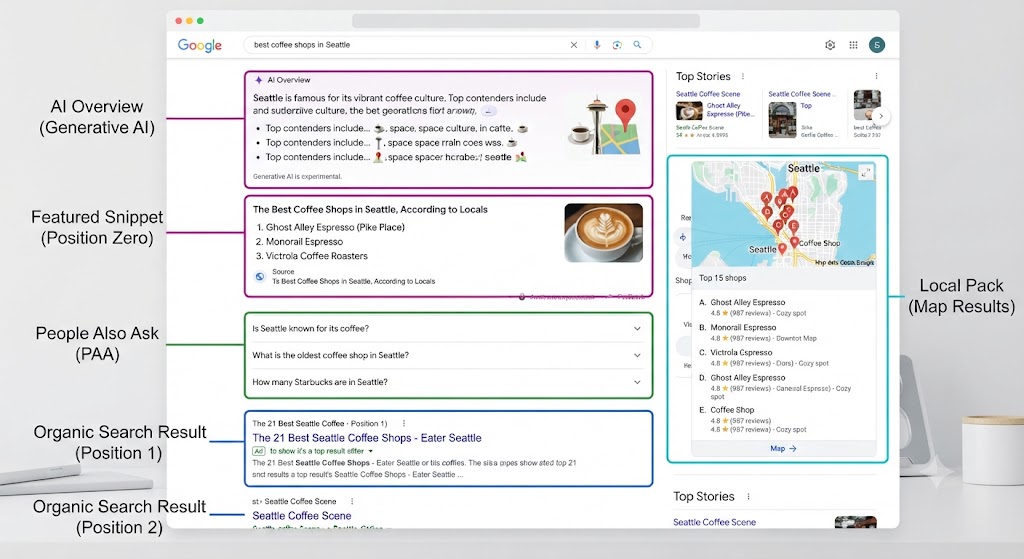
Image Concept: Annotated SERP showing organic result, featured snippet, PAA, local pack, and AI Overview.
Alt Text: Google search results page showing SEO terms like featured snippet local pack organic result and AI Overview
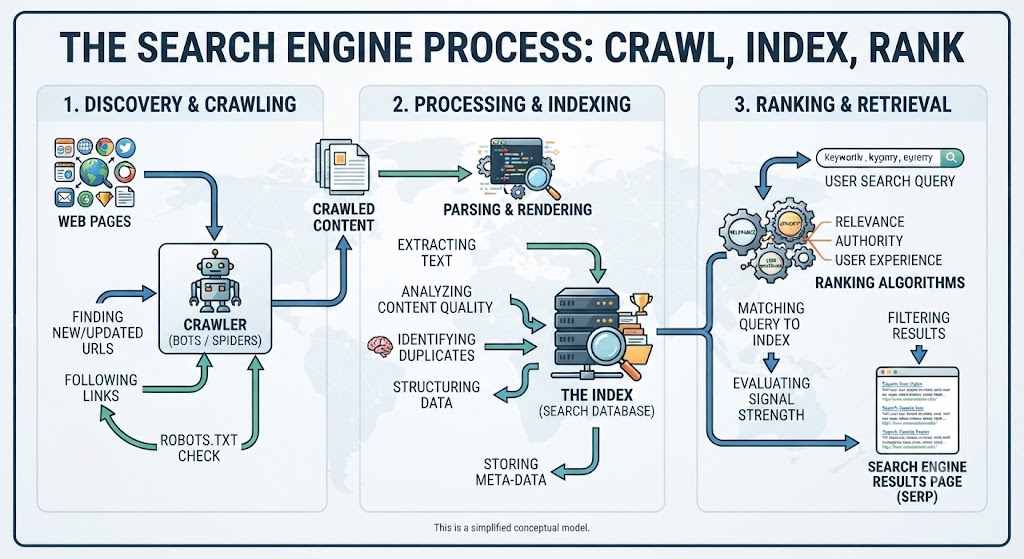
Image 4: Crawl, Index, Rank Flowchart
Image Concept: Flowchart showing how search engines crawl, index, and rank pages.
Alt Text: Search engine process flowchart showing crawling indexing and ranking
Image 5: Core Web Vitals Visual

Image Concept: Cards for LCP, INP, and CLS.
Alt Text: Core Web Vitals metrics LCP INP and CLS explained for SEO
Image 6: Internal Linking Diagram
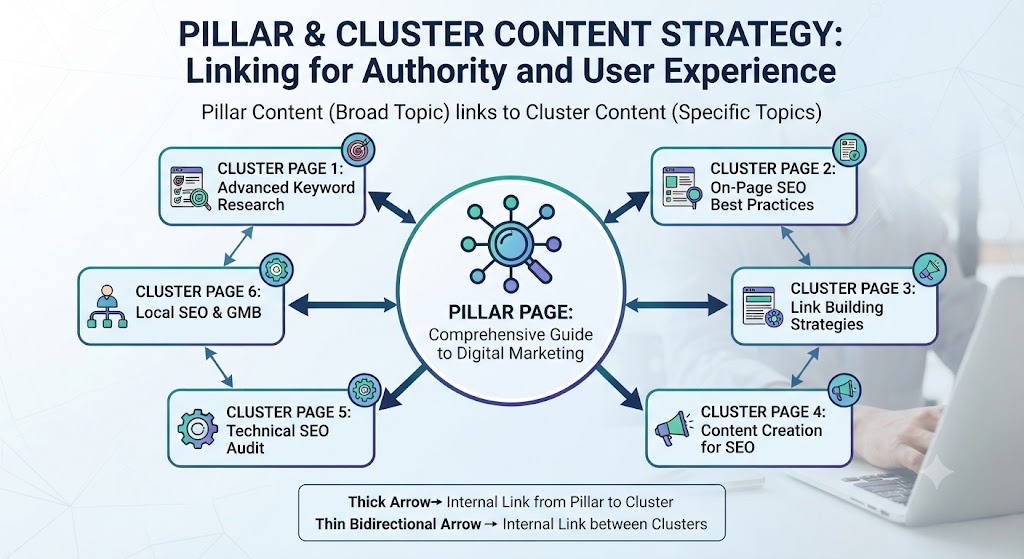
Image Concept: Pillar page linking to cluster pages.
Alt Text: Internal linking structure showing pillar page and topic cluster pages for SEO
Image 7: Backlink Diagram

Image Concept: Websites linking to one central website.
Alt Text: Backlink diagram showing external websites linking to a central website for SEO authority
Image 8: SEO Funnel Graphic

Image Concept: TOFU, MOFU, BOFU content mapped to search intent.
Alt Text: SEO funnel showing top middle and bottom funnel keywords and search intent
Schema Markup Recommendations
For this glossary page, use:
- BlogPosting schema
- BreadcrumbList schema
- DefinedTermSet schema
- FAQPage schema
- Organization schema
- Person schema for the author
Google recommends JSON-LD for structured data when possible, and Schema.org provides DefinedTermSet and DefinedTerm types specifically suited to glossaries and dictionaries. 10
BlogPosting Schema
JSON{
  "@context": "https://schema.org",
  "@type": "BlogPosting",
  "headline": "SEO Glossary: 250+ Must-Know SEO Terms in 2026",
  "description": "Learn 250+ SEO terms, from backlinks and Core Web Vitals to AI Overviews and GEO. Use this beginner-friendly SEO glossary with examples and FAQs.",
  "image": "https://www.example.com/images/seo-glossary-2026.jpg",
  "author": {
    "@type": "Person",
    "name": "Sarah Berry",
    "jobTitle": "Lead SEO Consultant"
  },
  "publisher": {
    "@type": "Organization",
    "name": "WebFX",
    "logo": {
      "@type": "ImageObject",
      "url": "https://www.example.com/images/webfx-logo.png"
    }
  },
  "datePublished": "2026-06-30",
  "dateModified": "2026-06-30",
  "mainEntityOfPage": {
    "@type": "WebPage",
    "@id": "https://www.example.com/seo-glossary/"
  }
}
BreadcrumbList Schema
JSON{
  "@context": "https://schema.org",
  "@type": "BreadcrumbList",
  "itemListElement": [
    {
      "@type": "ListItem",
      "position": 1,
      "name": "Home",
      "item": "https://www.example.com/"
    },
    {
      "@type": "ListItem",
      "position": 2,
      "name": "SEO",
      "item": "https://www.example.com/seo/"
    },
    {
      "@type": "ListItem",
      "position": 3,
      "name": "SEO Glossary",
      "item": "https://www.example.com/seo-glossary/"
    }
  ]
}
DefinedTermSet Schema Sample
Use your CMS or developer resources to dynamically generate this for every glossary term.
JSON{
  "@context": "https://schema.org",
  "@type": "DefinedTermSet",
  "name": "SEO Glossary",
  "description": "A glossary of 250+ SEO terms and definitions for marketers, business owners, and website teams.",
  "url": "https://www.example.com/seo-glossary/",
  "hasDefinedTerm": [
    {
      "@type": "DefinedTerm",
      "name": "SEO",
      "description": "Search engine optimization is the process of improving a website to increase its visibility in unpaid search engine results.",
      "url": "https://www.example.com/seo-glossary/#seo"
    },
    {
      "@type": "DefinedTerm",
      "name": "Backlink",
      "description": "A backlink is a link from another website to your website.",
      "url": "https://www.example.com/seo-glossary/#backlink"
    },
    {
      "@type": "DefinedTerm",
      "name": "Core Web Vitals",
      "description": "Core Web Vitals are user experience metrics focused on loading performance, interactivity, and visual stability.",
      "url": "https://www.example.com/seo-glossary/#core-web-vitals"
    }
  ]
}
FAQPage Schema
JSON{
  "@context": "https://schema.org",
  "@type": "FAQPage",
  "mainEntity": [
    {
      "@type": "Question",
      "name": "What is SEO?",
      "acceptedAnswer": {
        "@type": "Answer",
        "text": "SEO stands for search engine optimization. It is the process of improving a website to increase its visibility in unpaid search engine results."
      }
    },
    {
      "@type": "Question",
      "name": "Why is SEO important?",
      "acceptedAnswer": {
        "@type": "Answer",
        "text": "SEO is important because it helps businesses attract qualified traffic from people actively searching for information, products, or services."
      }
    },
    {
      "@type": "Question",
      "name": "What are the most important SEO terms to know?",
      "acceptedAnswer": {
        "@type": "Answer",
        "text": "Important SEO terms include SEO, keyword, search intent, SERP, backlink, title tag, meta description, technical SEO, on-page SEO, internal link, Core Web Vitals, and schema markup."
      }
    },
    {
      "@type": "Question",
      "name": "What is technical SEO?",
      "acceptedAnswer": {
        "@type": "Answer",
        "text": "Technical SEO is the process of optimizing website infrastructure so search engines can crawl, render, index, and understand content efficiently."
      }
    },
    {
      "@type": "Question",
      "name": "What is schema markup?",
      "acceptedAnswer": {
        "@type": "Answer",
        "text": "Schema markup is structured data added to webpages to help search engines understand content."
      }
    }
  ]
}